
What Modern Commercial Kitchens Can Learn from the Still Room
Pantry, larder, scullery. Most people have heard of these, even if few still have them. But there’s one room that’s almost vanished from memory altogether, and it has more to do with how we design kitchens today than its name suggests.
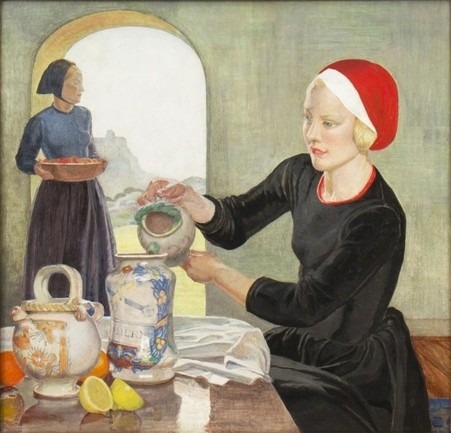
The still room. Not the modern hospitality term for a tea and beverage station, but the historical room found in country houses where medicines were compounded, cordials distilled, preserves made and rosewater drawn off for the table. Part laboratory, part larder, it reminds us that kitchens once did something we’ve largely designed out of them.
A discipline, not a hobby
The transformation of raw ingredients into something lasting is far older than the country house. Fermentation evidence goes back roughly 13,000 years in what is now Israel; Egyptian tomb paintings from around 2100–2000 BC show organised bread and beer production; China has evidence of fermented rice drink from around 7000 BC. Across almost every early civilisation, the person who understood fermentation, distillation and preserving was also the person who understood medicine. The categories we now keep separate – kitchen, pharmacy and laboratory – simply didn’t exist.

One figure is worth pausing on: Maria Prophetissima, an Alexandrian alchemist of the first or second century AD, credited by many historians as one of the earliest named practitioners of alchemy in the Western tradition. She’s remembered today not for recipes but for apparatus. Among the equipment attributed to her or her circle is the bain-marie, still standard in professional kitchens nearly two thousand years later. Her contribution was treating transformation as a discipline: observed, apparatus-driven and recorded.
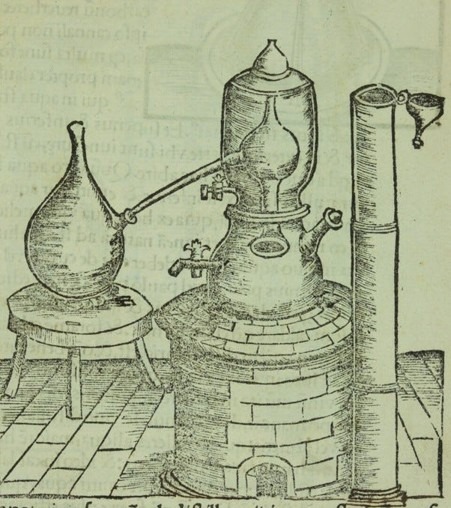
That habit of recording is what carried the knowledge forward. Benedictine and Cistercian monasteries farmed, brewed, treated the sick and kept meticulous records. More importantly, they absorbed distillation techniques refined by Islamic scholars and physicians, which entered Latin Europe through centres including the Medical School of Salerno. Hildegard of Bingen’s writings on natural history became some of the most influential scientific texts of the Middle Ages. By the thirteenth century, distilled spirits appeared in monastic medicinal records as aqua vitae. Water of life. Medicinal first, recreational later.

When Henry VIII dissolved the monasteries in the 1530s, the institutions disappeared. The knowledge didn’t. It moved into great houses, where the still room became one of the household’s most sophisticated working departments.
The women who ran it
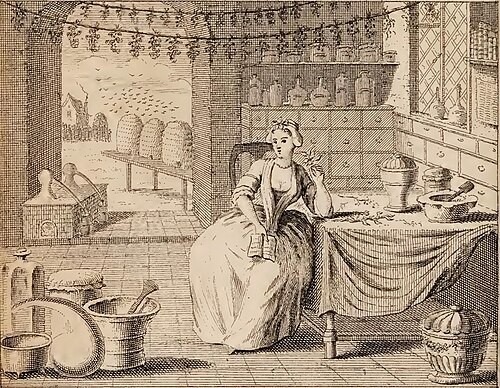
The still room was managed, almost without exception, by women. It was a workshop of testing, preservation, distillation and record-keeping, not a domestic sideline. I’ve outlined just a few of the notable women of history below:
Elinor Fettiplace, mistress of a household feeding twenty to thirty people daily, left a remarkable receipt book covering food, medicine, perfume, ink and even pest control.
Grace Mildmay ran an extensive unpaid medical practice from Apethorpe Hall, treating both her household and neighbours, and left behind over two thousand medical papers alongside one of the earliest surviving autobiographies by an Englishwoman. Recent scholarship has also traced ingredients in some of her remedies back to Indigenous medicinal knowledge from the Americas, absorbed without attribution. The still room preserved knowledge; it wasn’t always careful about acknowledging where that knowledge came from.
Then came Hannah Woolley. She took what had largely been inherited manuscript knowledge and published it under her own name, becoming one of England’s first professional female writers. Once the recipe for your rosewater could be bought in a bookshop, the still room stopped being unique to your household.

Why it disappeared
The decline was gradual.
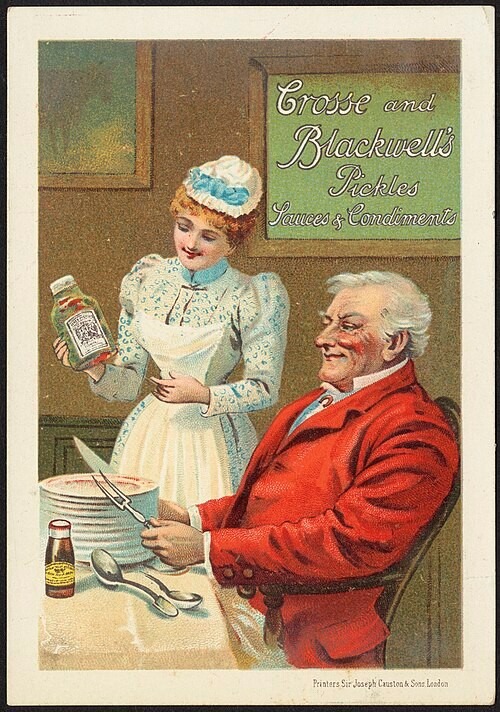
Industrial preservation made jams and pickles cheaper to buy than to make. Canning transformed food storage after Nicolas Appert’s heat-preservation methods, Peter Durand’s tin patent and Bryan Donkin’s commercial production for the Royal Navy. The First World War accelerated the decline as domestic service shrank dramatically. By the time Escoffier’s brigade system defined the modern professional kitchen, preservation and household pharmacy had already become separate industries.
Architecture followed industry.
The space once devoted to transforming raw ingredients simply wasn’t required anymore.
Why it matters now
Many modern commercial kitchens are built on the assumption that transformation has already happened elsewhere. Ingredients arrive bottled, tinned, frozen or fermented before they reach the chef. The architecture reflects that assumption: the space once devoted to preserving, distilling and processing raw produce simply isn’t specified anymore.
And yet every year, kitchens are asked to do more of exactly that. Fermentation, curing, pickling, house vinegars, waste-reduction preserving. Restaurants are beginning to do still-room work again, from Noma’s dedicated fermentation lab in Copenhagen down to smaller kitchens pickling stems and ageing miso in whatever corner they can find. The ambition has returned. The space hasn’t.
A still room was never a nostalgia project, it was a manufacturing department with its own equipment, ventilation, storage and staffing needs, built on the premise that food, medicine and chemistry weren’t three different jobs but one. If we’re asking kitchens to take on that work again, they need to be designed for it, not expected to absorb it into a walk-in that was never built for the purpose.
Sometimes I wonder what it would be like to stay in a hotel that genuinely embraced that philosophy. Checking into a room where the soap by the basin, the lavender pillow mist, the preserves at breakfast, the fruit cordial with dinner, even the vinegar in the salad dressing had all been made a few doors away, by people who understand how to transform the harvest into something lasting.
We spend a lot of time chasing “authentic” experiences; I struggle to think of anything more authentic than that.
So perhaps one day the brief won’t ask for another prep room or another walk-in fridge. It’ll simply say: design me a still room. We’ll be ready.
Written by Giorgia Lardner
Further reading
This article focuses on what the still room means for modern kitchen design. If you’d like to explore its history in greater depth, I’ve written a much more detailed version on my Substack: I. Before There Was a Still Room